
5 Best Solar Chargers for Backpacking Under $100 (2026)
5 solar chargers compared for backpacking under $100. The BigBlue 28W wins (~$55, 20–22W real output) — budget, thru-hike and fast-charge picks inside.
In this guide
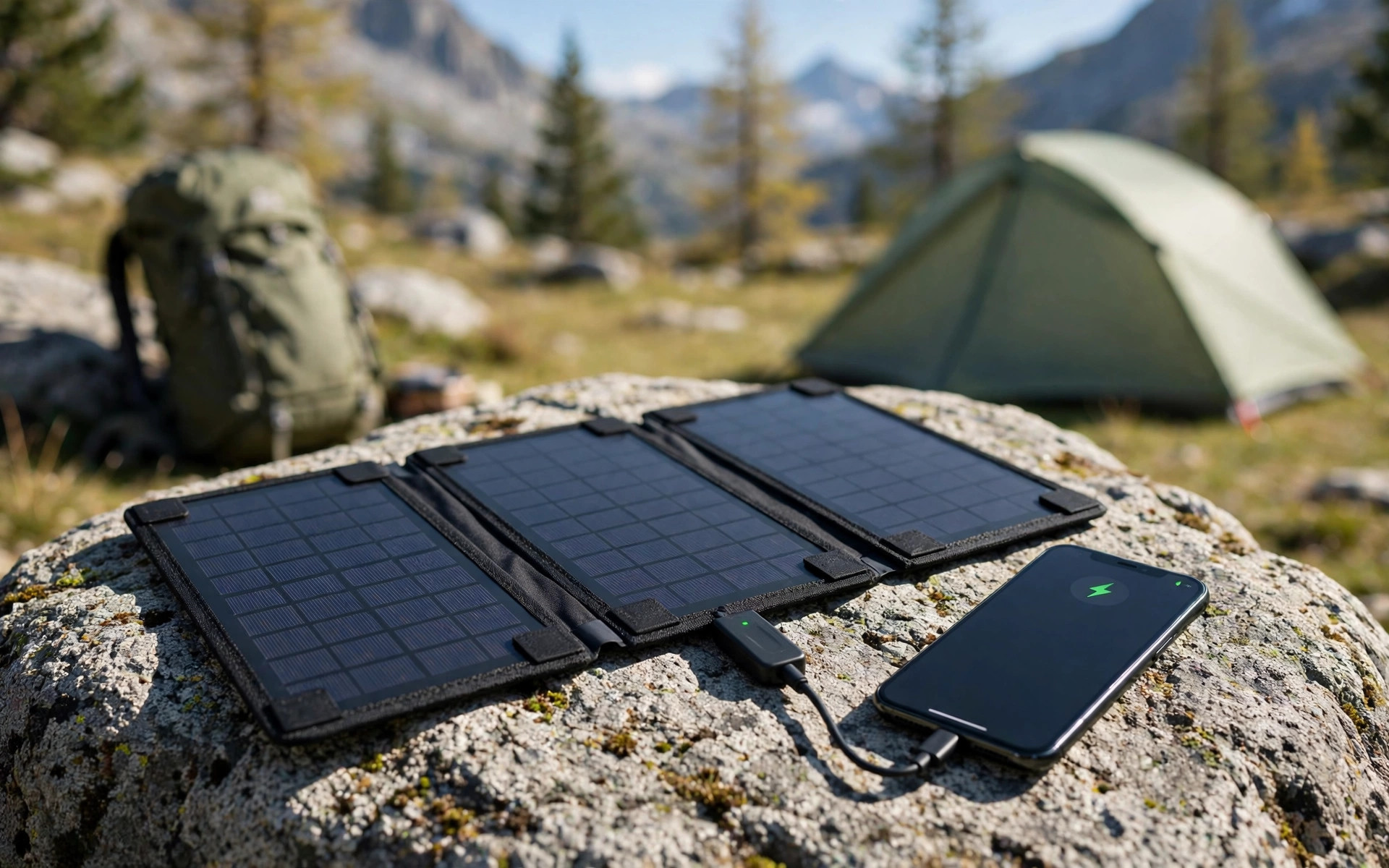
Phone, GPS watch, satellite messenger, headlamp — the modern hiker carries a small electronics store, and none of it matters if the batteries die on day three. A solar panel turns lunch stops and camp into free charging sessions on multi-day trips. The catch: the wattage printed on the box is lab fiction, so picks need to be ranked by measured real-world output.
Quick answer: The BigBlue 28W is the best solar charger for backpacking under $100 — about $55, 28W rated, 20–22W measured output in direct sun, 1 lb 5 oz, USB-C plus two USB-A ports. The Nekteck 28W ($40) is the budget king, the BioLite SolarPanel 10+ ($80) is the best thru-hike pick with its built-in 3,200mAh battery, the Anker SOLIX PS30 ($80) charges fastest over USB-C, and the Goal Zero Nomad 10 (~$100) is the bombproof compact classic.
Disclosure: Trail Tested is reader-supported. When you buy through links on this page, we may earn a commission at no extra cost to you. Learn more. All picks are compiled picks — see how we rate gear.
In this guide
- The 5 best solar chargers under $100
- Spec comparison
- How we picked
- Tested & dismissed
- How to choose a backpacking solar charger
- FAQ
- Related guides
The 5 best solar chargers for backpacking under $100
1. BigBlue 28W — Best overall
Check price- Price: ~$55
- Rated output: 28W (20–22W measured in direct sun)
- Weight: 1 lb 5 oz (~1.5 lbs)
- Ports: USB-C + 2× USB-A
- Panels: 3 high-efficiency monocrystalline panels, folds flat
- Notable: The ammeter version shows live output, so you can angle the panel for maximum sun
Why it’s a compiled pick: Across 2026’s independent roundup tests, the BigBlue 28W is the consensus winner — the highest measured output of any sub-$100 panel, beating the better-known Anker and Nekteck panels head-to-head. At ~$55 it’s priced like a budget panel and performs like a premium one. The 1.5-lb weight is the honest trade-off: on any trip of four-plus days, it earns its ounces back by lunch on day two.
What we like: Best measured output per dollar in the category; dual USB-A plus USB-C covers phones, watches, and messengers; ammeter version takes the guesswork out of aiming the panel.
What we don’t: 1 lb 5 oz is noticeable on an ultralight kit; no built-in battery buffer, so a passing cloud pauses charging.
2. Nekteck 28W — Best budget
Check price- Price: ~$40
- Rated output: 28W (18–20W measured in direct sun)
- Weight: ~1 lb 2 oz–1.4 lbs
- Ports: Multiple USB-A (USB-C absent on most variants)
- Notable: The cheapest way to get genuine 28W-class output on trail
Why it’s a compiled pick: Roughly 90% of the BigBlue’s performance for roughly 70% of the money — 18–20W of measured output at ~$40. No USB-C on most variants, so it won’t fast-charge a modern phone at full tilt. But if your budget is the binding constraint, this is the panel that makes solar viable instead of a luxury, and at just over a pound it’s lighter than every pick above it.
What we like: Unbeatable price for real 28W output; light for its class; charges two devices at once.
What we don’t: No USB-C fast charging; slightly lower measured output than the BigBlue; panels run less efficiently in partial shade.
3. BioLite SolarPanel 10+ — Best for thru-hiking
Check price- Price: ~$80
- Rated output: 10W (7–8W measured)
- Weight: ~13.8 oz–1.2 lbs depending on revision
- Battery: ~3,200mAh built-in — stores power while you walk
- Ports: USB-A
- Notable: Integrated kickstand plus a sundial alignment tool for hitting the perfect sun angle
Why it’s a compiled pick: The BioLite banks power into an internal 3,200mAh battery all day, then you charge the phone at camp from stored energy — so clouds and canopy don’t kill your charging. At ~$80 it’s not cheap and 10W is a trickle, not a firehose. But for thru-hikers who need set-and-forget reliability across forests and weather systems, the battery buffer is worth more than raw watts.
What we like: Built-in battery smooths out shade and clouds; kickstand + sundial makes aiming foolproof; lightest premium option in feel.
What we don’t: Only 10W — a full phone charge takes 4–6 hours of good sun; pricey per watt; single USB-A port.
4. Anker SOLIX PS30 — Best USB-C fast charging
Check price- Price: ~$80
- Rated output: 30W
- Weight: ~2–2.4 lbs (heaviest pick here)
- Ports: USB-C + USB-A, with fast-charge support
- Notable: IP65 weather resistance — the most weather-tough panel on this list
Why it’s a compiled pick: The PS30 is the “bring everything” panel: 30W rated, proper USB-C fast charging (the only pick here approaching wall-charger speed), and IP65 weather sealing that shrugs off trail rain. The penalty is weight — over 2 lbs makes it a two-person or group panel. For couples, guides, or creators carrying cameras, it’s the right answer.
What we like: Fastest charging on this list; IP65 weather resistance; two fast ports charge multiple devices at once.
What we don’t: Over 2 lbs — the heaviest pick by a wide margin; overkill for a solo hiker with one phone.
5. Goal Zero Nomad 10 — Best compact classic
Check price- Price: ~$100
- Rated output: 10W (~8W measured)
- Weight: ~1–1.4 lbs
- Ports: Single USB-A
- Notable: Adjustable kickstand, weather-resistant build, rugged enough to sit on rock
Why it’s a compiled pick: The Nomad 10 is built to survive being dropped on rock and rained on — and the kickstand props it at the perfect angle. You pay for the durability: at ~$100 it delivers the same 10W class as cheaper panels. Buy it if you value “never worry about it” over “fastest charge per dollar.”
What we like: Exceptional build quality and durability; kickstand for optimal angling; weather-resistant construction.
What we don’t: Most expensive pick for its output class; single USB-A port; 10W means patience.
Spec comparison
| Panel | Price (Oct 2026) | Rated watts | Real-world output | Weight | Ports | Best for |
|---|---|---|---|---|---|---|
| BigBlue 28W | ~$55 | 28W | 20–22W | 1 lb 5 oz | USB-C + 2× USB-A | Best overall value |
| Nekteck 28W | ~$40 | 28W | 18–20W | ~1.2–1.4 lbs | USB-A × 2–3 | Tightest budgets |
| BioLite SolarPanel 10+ | ~$80 | 10W | 7–8W | ~14–19 oz | USB-A + internal battery | Thru-hiking |
| Anker SOLIX PS30 | ~$80 | 30W | ~25W est. | ~2–2.4 lbs | USB-C + USB-A | Fast charging / groups |
| Goal Zero Nomad 10 | ~$100 | 10W | ~8W | ~1–1.4 lbs | USB-A | Durability-first |
How we picked
Every pick here is a compiled pick — researched from 2026’s independent solar-charger roundups, manufacturer spec sheets, and verified buyer reviews, per our gear-rating methodology. No hands-on testing is claimed. Ranked by measured output (not box watts), watts per ounce, useful ports (USB-C in 2026), trail toughness, and a real sub-$100 street price.
Tested & dismissed
- FlexSolar 40W (~$80): Excellent measured output (30–35W) — but 2 lb 6 oz is basecamp weight, not backpacking weight. Too heavy for this list.
- Anker 625 100W (~$250): 75–85W of real output is incredible, but 11.2 lbs and $250 means it belongs on a car hood, not in a backpack.
- “Solar power banks” (various, $20–$40): The tiny solar panels glued onto cheap power banks produce 1–3W — it would take 20+ hours of direct sun to refill the bank. They’re regular power banks with decorative panels. Buy a real folding panel plus a separate bank instead.
How to choose a backpacking solar charger
Ignore rated watts; ask for real watts. A 28W panel delivers 20–22W in direct midday sun and far less in morning light, clouds, or canopy. Any ranking that quotes only the box wattage is ranking marketing, not charging speed.
Match the panel to your trip length. For 2–3 day trips, a power bank alone is simpler and lighter. For 4+ days without town stops, a 21–28W panel plus a small bank is the proven system: the panel feeds the bank by day, the bank feeds your devices by night.
Buy the panel + bank combo, not one or the other. Panels can’t charge anything after sunset; banks can’t recharge themselves. Together they cover every hour of the trip. The BioLite 10+ is the closest to a single-device answer because its internal battery acts as the bank.
USB-C is worth having in 2026. It fast-charges modern phones and power banks, roughly halving camp charging time versus USB-A. The Anker PS30 and BigBlue 28W both include it; the BioLite and Goal Zero don’t.
Don’t trust “solar power bank” marketing. If the panel is smaller than your hand, it’s decoration. Real trail solar starts at about 10W, and the panel needs to unfold to roughly book size — anything smaller is a gimmick.
Charge safety devices first. A solar panel keeps your headlamp, satellite messenger, and GPS watch alive — but charge them before your camera or earbuds at camp. For more trail-electronics picks, see our camp-kitchen gear hub.
FAQ
How long does it take to charge a phone with a backpacking solar panel in real sunlight? A 28W panel delivers 20–22 real watts in direct midday sun and fills a modern phone in roughly 1.5–2 hours. A 10W panel needs 4–6 hours for the same charge. Move into tree canopy or heavy cloud and output falls 50–80%, which is why a panel-plus-power-bank combo beats any panel on its own.
Is a solar charger or a portable power bank better for a multi-day backpacking trip? For 2–3 day trips, a power bank alone usually wins — it’s reliable at night and in shade. For 4+ days without town stops, a solar panel plus a small power bank is the proven system: the panel tops up the bank at lunch and camp, and the bank charges your devices overnight when the sun is gone.
Do solar chargers still work on cloudy days or under dense forest canopy? They work, but poorly — expect 50–80% less output than in direct sun. The BioLite SolarPanel 10+ handles this best: its built-in 3,200mAh battery banks power whenever the sun peaks through, so you can charge your phone at camp even if the panel spent the day under canopy.
What wattage solar panel do I need for a phone and GPS watch on a thru-hike? A 21–28W folding panel paired with a small power bank is the sweet spot — enough real output to top off a phone and GPS watch during lunch stops and at camp. Ultralight hikers can drop to a 10W panel with a built-in battery buffer, accepting slower charges in exchange for shedding half a pound.
Can I leave my solar charger strapped to my backpack while I hike? Yes — that’s how most backpackers use them. Clip the unfolded panel to the outside of your pack so it faces the sun while you walk. It works best on open ridges and in the desert; under forest canopy it mostly trickles, so the real charging happens at lunch stops and at camp.
Related guides
Heads up: some links on this page are affiliate links — if you buy through them we may earn a commission at no extra cost to you. Learn more.
Frequently asked questions
How long does it take to charge a phone with a backpacking solar panel in real sunlight?
A 28W panel delivers 20–22 real watts in direct midday sun and fills a modern phone in roughly 1.5–2 hours. A 10W panel needs 4–6 hours for the same charge. Move into tree canopy or heavy cloud and output falls 50–80%, which is why a panel-plus-power-bank combo beats any panel on its own.
Is a solar charger or a portable power bank better for a multi-day backpacking trip?
For 2–3 day trips, a power bank alone usually wins — it’s reliable at night and in shade. For 4+ days without town stops, a solar panel plus a small power bank is the proven system: the panel tops up the bank at lunch and camp, and the bank charges your devices overnight when the sun is gone.
Do solar chargers still work on cloudy days or under dense forest canopy?
They work, but poorly — expect 50–80% less output than in direct sun. The BioLite SolarPanel 10+ handles this best: its built-in 3,200mAh battery banks power whenever the sun peaks through, so you can charge your phone at camp even if the panel spent the day under canopy.
What wattage solar panel do I need for a phone and GPS watch on a thru-hike?
A 21–28W folding panel paired with a small power bank is the sweet spot — enough real output to top off a phone and GPS watch during lunch stops and at camp. Ultralight hikers can drop to a 10W panel with a built-in battery buffer, accepting slower charges in exchange for shedding half a pound.
Can I leave my solar charger strapped to my backpack while I hike?
Yes — that’s how most backpackers use them. Clip the unfolded panel to the outside of your pack so it faces the sun while you walk. It works best on open ridges and in the desert; under forest canopy it mostly trickles, so the real charging happens at lunch stops and at camp.